Supply Trends & Quality Standards for Personal Care and Home Care Raw Materials
Quality standards and supply chains play major roles in making the personal and home care raw materials market.
The main challenge for foreign chemists, purchasing teams, and producers is whether raw material is available at low price. They rather need to make sure they have continuous availability of quality goods, a dependable delivery, meet regulations requirements, and that products' properties remain the same after formulation.
Supply vs Consumption: A Change from Lowest Price to Consistent Supply
In all these products surfacants have a vital role: detergents, shower gels, liquid soaps, body washes, detergents, household cleaners,
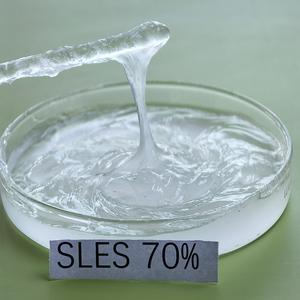
- AES and SLES are two surfactants that remain popular as they produce good lather, cleaning properties, their formulas are very compatible with each other, and they can be used in a variety of ways with little adjustments to process.
Market trends however can be affected by feedstock prices, local production limits, production costs, freight charges, and demand for the final product. Short run price shifts may not represent the whole scenario of a supplier.
Industrial purchasers apart from taking into account unit price they also should consider the supplier capacity, the lead time, minimum order quantities, inventory availability, and delivery consistency.
Sources Of Industrial Buyers Upstream Raw Materials And Manufacturing Consistency
Main characteristics of surfactants like active concentration, foaminess, viscosity, compatibility with other components, etc., highly depend on the raw materials used (e.g., fatty alcohols, EO units) and the manufacturing methods. Ethoxylation temperature, ethoxylation pressure as well as sulfonation processes also play a very significant role. These are just some of the numerous factors that have to do with the production of surfactants and their characteristics.
On the other hand, for SLES, the ethoxylation process itself and the sulfation (in the absence of the acid) are the main factors which determine the properties of the final product including active matter, color, viscosity, presence of undesirable products, etc. These two processes also affect the overall performance of the formula.
AES products too change their properties depending on the source of raw materials used, kind of manufacturing technology and the level of dilution.
That is the reason why a buyer should not assess a product only by the product name or concentration. The only sure way of getting consistent supply for your product is a supplier who is in good standing and provides a detailed specification sheet and one that guarantees batch-to-batch consistency.
Key Quality Metrics
Normally used quality checks for daily chemistry applications include active matter, pH levels, water content, color, consistency, free oleic acid/oil, unsulfated matter, inorganic salts etc., and the level of any impurity is dependent on the product.
Sourcing the right specification depends a lot on the end purpose. For example, an anti-dandruff shampoo formulation might be looking for different performance characteristics as compared to an industrial floor-cleaning detergent formula.
Hence, good buyer practice requires that the Certificate of Analysis (COA) is closely tied with the formulation requirements. It is possible to detect deviations and avoid commercial-scale losses through product testing, small-scale experiments, and ongoing batch analysis.
Meeting Regulations and Producing Documents
Technical quality is a very important factor in supplier qualification especially for exporting goods internationally. However, it is equally relevant for the buyers to ensure that they obtain all the regulatory paperwork including quality certificates for the raw materials that their destination market requires.
Depending on the product and target countries, suppliers may be asked to share various documents such as SDS, TDS, COA, regulatory declarations, impurity data, allergen statements, and product compliance documents, among others.
In addition to that, suppliers must be able to ensure clear batch traceability. For manufacturers exporting to different countries, being able to deliver uniform documentation is a good way to prevent or at least minimize delays during customer audits, regulatory reviews, or product registration.
Procurement Risks beyond Just Price
The lowest quotation is not always the least expensive option when it comes to total procurement cost. Risks that are not expected may show up as unstable quality, delayed shipments, inconsistent packaging, no technical help available, and variation in performance between different batches of formulation.
An actual supplier assessment should include factors such as production capacity, quality control systems, export track record, logistics facilities, handling customer complaints, and plans for emergency scenarios.
For vital raw materials like AES and SLES, having multiple suppliers (or keeping an alternative supplier on standby after qualification) can help to prevent significant disruptions due to unexpected changes in production or logistics.
Applications and Formulation Considerations
AES and SLES make excellent ingredients for shampoos, shower gels, liquid hand soaps as well as facial, body cleansing products, dishwashing liquids, laundry detergents and other general-purpose cleaners.
Still, it is wise to evaluate the product choice using an entire formulation system rather than just the type of surfactant. Active substance concentration, foaming capability, how gentle the product should be, how the viscous it should flow, reactions to salty substances, the stability with other components, and the processing temperatures together with the type of product are amongst the factors that determine which grade will be most suitable.
Formulators especially benefit from their suppliers technical support if they want to change a formulation using a new raw material or if they want to switch their material source.

Environmental Responsibility Is an Influencing Factor While Procuring Materials
At one time, sustainable development was a theme mainly for marketing campaigns, today, it has taken on the role of an operational aspect within the supply chain. Purchasing managers are becoming increasingly aware of how their product sourcing could be from renewable and responsible sources, manufacturing efficiency, packaging materials, water quality, energy efficiency, and supply-chain transparency.
For manufacturers, the most sustainable purchasing decision at a low price might be one of the major considerations. However, a trustworthy supplier who brings a steady quality, reduces the production losses to the minimum, issues transparent documents and helps in an efficient formulation development, all together will reduce the resource consumption.
What Global Buyers Should Watch
Roughly, current suppliers are telling potential buyers that the selection of raw materials involves more factors than simply price and availability. A more comprehensive approach could include aspects such as the stability of supply, the degree of upstream control, the ability to measure and control quality levels, a regulatory compliant production process, the provision of technical and expert support, and the level of sustainability.
For overseas raw material suppliers and product formulators, priority is to define clear purchasing requirements and specifications, to test samples in the formulation laboratory or in an actual production environment, and to regularly check on their suppliers by means of quality certificates, audits or any other form of supplier qualification. In a rapidly changing market where costs and supply conditions fluctuate quickly, high-quality products and well-organizing supply chains will be fundamental to the success of manufacturing operations in the long run.