N-Heptane Solvent Selection for Rubber Processing
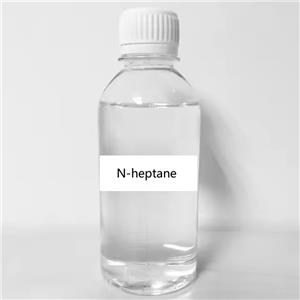
N-heptane is the most commonly used aliphatic hydrocarbon solvent in the rubber industry. It can be effectively employed in rubber extraction, polymer dissolution, adhesive preparation, sample analysis and auxiliary processing of both natural and synthetic rubber. Inappropriate selection of solvent may directly harm rubber purity, surface quality, residual level of volatile components, safety at the production site and the end mechanical properties of rubber products.
For rubber manufacturers, compounding engineers and raw material procurement teams, understanding the main factors for evaluating n-heptane will help them prevent formulation errors and production risks as well as to reduce the material costs in the long run. This paper discusses the critical factors in n-heptane solvent selection for rubber processing.
Purity and Hydrocarbon Makeup
Purity is the main parameter in choosing n-heptane solvent for rubber processing.
Industrial grade n-heptane is a combination of different alkanes, not a single-component substance. The less the amount of isoalkanes, cycloalkanes and aromatic hydrocarbons, the higher the purity.
Rubber extraction process requires a very clean solvent - the higher n-heptane purity is, the more consistent is the dissolving ability from batch to batch. This leads to higher extraction efficiency. If the solvent with excessive branched alkanes is used, solvency power will vary, resulting in extraction process inefficiency and instability. A buyer must review the gas chromatography (GC) data of Certificate of Analysis (COA)
Typically, commercial-grade n-heptane maintains n-heptane concentration above 95%. But for rubber products like medical rubber or precision sealing parts, customers require n-heptane purity ≥99%
Boiling Range and Evaporation Performance
The boiling range of a solvent is one of the indicators that show the rate of evaporation and the amount of solvent remained after the rubber was processed. For example, n-heptane has a boiling point of about 98.4°C. A boiling range which is narrow in nature is more suitable for rubber production. On the other hand, solvents with a wide boiling range would evaporate unevenly during drying causing irregularity of drying behavior in products. When using solvents in dipping and glazing of rubbers one would want a solvent that evaporates both quickly and evenly, for instance, since uneven film formation, blisters, and pin holes are common problems that may arise on the rubber surface due to the slow or rapid evaporation of the solvents.
Any solvent residue that is heavier than the solvent itself is going to cause volatile organic compounds (VOCs) to stay in the rubber material and consequently lead to odor, rubber size changes, and quality issues in produced goods. For formulas of cure-free or very low temperature rubber, the creators have to do a evaporation run test and adjust the boiling range to the settings on the production line.
Aromatic Content
The degree to which aromatics are present is a fundamental criterion for the quality of rubber-grade n-heptane. In addition to benzene, toluene and xylene, which are considered hazardous impurities, aromatics in general can lead to undesired swelling of the rubber, discoloration and faster aging. Numerous end markets, like in the automotive rubber industry, food-contact and medical rubber also demand that aromatic residuals remain within very minimal amounts. Besides that, exposure to aromatic compounds poses occupational health risks while at the same time violating environmental regulations in some regions.
This is the reason why reliable n-heptane suppliers keep total aromatic content below 100 ppm when offering products designated for rubber processing. If rubber items come into contact with food or are used indoors, the rubber must be processed using low-aromatic n-heptane exclusively.
Solvency & Rubber Polymer Resistance
n-Heptane is a nonpolar paraffinic solvent that is able to dissolve small rubber fractions and serve as carrier for rubber additives very effectively. It is quite different from aggressive aromatic solvents in that it doesn't break down the high molecule part of the rubber that is resistant to degradation. As different rubbers have different compatibility, natural rubber, polyisoprene, and butyl rubber, e.g., exhibit moderate swelling in n-heptane.
A formulator should test the rate of swelling before going for mass production. Over-swatting of the rubber results in a degradation of its physical strength. Inadequate solvency results in the extraction of rubber oligomers and processing aids being incomplete. It is recommended for procurement departments to run a small-scale experiment with their own rubber recipes to determine compatibility before ordering large quantities.
Water Content and Moisture
The content of water is one of the factors that highly affect the stability of the rubber processing. For instance, too much water in the n-heptane solvent can lead to emulsification, bubble generation and poor surface finish after the rubber has been dissolved and coated. Water also makes metal tanks, pipes and machines rust faster. Karl Fischer titration is the commonly used method of determining the actual water content. Normally, a rubber processing solvent should have water content less than 100 ppm. Storing n-heptane in an environment of high humidty increases its water absorption. Therefore, it is recommended to use sealed metal drums and ISO tank transport for cross-border shipments.
Safety, Flash Point and Risk Classification
It is a highly volatile substance and a flammable liquid that has the very low flash point. Safety conditions are very important in the case of running the factory, the storage, and the international transport. The flash point of n-heptane is around -4℃. It is required that explosion-proof equipment, proper ventilation, and grounding measures should be part and parcel of the production workshop. The foreign trade buyers need to know UN number, the correct shipping name or the description, and the hazard class when shipping goods. The countries’ regulations differ regarding the distance of storages, packaging label, and MSDS. Misclassification will lead to customs delay, penalty, or transport refusel. When checking the list of potential suppliers, the buyers are expected to ask for complete hazard documentation like for instance SDS, UN packaging certificate, and the local regulation statements.
Residual Impurities and Color
Color and residual sulfur are second-level but essential signs of quality. A good grade of n-heptane used in rubber industry is completely pale and highly pure n-heptane as can be seen from APHA color scale of almost zero. In most cases, the solvent that shows yellow hue is loaded with sulfur or heavy hydrocarbon residues. Apart from causing bad smell and being very polluting, sulfur compounds can react with the rubber vulcanization system altering setting time and final strength of the rubber product. Besides sulfur compounds, it is also vital to limit the content of trace metals in the solvent for the sake of premium rubber applications. Suppliers, on their chemical certification of analysis for each batch of a product should, include complete impurity testing results to provide quality assurance to rubber companies.
Different rubber processing cases require different n-heptane specs
-For rubber raw material extraction and purification:
The main qualities here would be high purity, narrow boiling range, and ultra-low aromatics.
-For rubber adhesive dilution:
A reasonable level of purity would be acceptable but the evaporation rate has to be stable and the water content has to be low.
-For laboratory rubber analysis:chromatographic grade of high purity ≥99% is commonly used.
Some manufacturers buy cheaper general industrial n-heptane that is not suitable for high-end rubber production. As a result, their products often have unstable vulcanization, rubber discoloration and high residual VOC, leading to product rejection and customer complaints.
Global Trade and Regulatory Compliance
Rubber solvent such as n-heptane needs a global supply chain but still has to follow the local regulations for chemical products.Registry under REACH is applicable in EU, for the USA market - TSCA compliance, import license for hazardous chemical products in the importing country must be obtained. Importer must verify whether the seller is able to provide COA, SDS, reports of the tests, documents of registering the product. n-heptane is considered as a dangerous substance, so the preparation of packaging, marking and declarations must meet UN standards strictly. As a matter of fact, the quality of a solvent may be negatively influenced by temperature fluctuations in transit, that is why tank and drum packaging integrity have to be checked before boarding.
Conclusion
n-heptane is a widely used aliphatic solvent in rubber processing that, however, the price alone will not tell you everything, you have to evaluate different solvent specifications in a systematic way.
Rubber production is influenced by multiple factors such as the purity of the solvent, the boiling range, aromatic content, water content, compatibility with polymers used in the formulations, flash point, and the presence of impurities.
Rubber producers should look for a solvent grade that fits their processing technology and end-product standards.
Performing a pilot run before major purchases helps prevent production issues. When buying n-heptane overseas, procurement teams should factor in lab KPIs, safety data, and local law regulations.
A careful choice of solvent will ensure a smooth rubber production process, lower defect rate, and continued product compliance for rubber goods exports.